 Skip to the content

Thinking About Moving to Middle Tennessee in 2026? 26 Things No One Tells You
Thinking about moving to Tennessee is exciting, but it can also be confusing. One video will tell you it is still cheap and quiet. Another will tell you it is overcrowded and falling apart. The truth sits in the middle. Tennessee has changed, and if you are planning a move in 2026, you need realistic, current information, not hype or fear.
I am Patricia Omishakin, and I help people relocate and find the right home and community in Middle Tennessee, including high-demand areas like Williamson County, Rutherford County, Wilson County, and Sumner County. Below are the real, on-the-ground things buyers and movers are often surprised by once they start looking seriously.
What should you know before moving to Tennessee?
• Growth is not even across the state
• Housing markets vary dramatically by region
• Cost of living depends on where you’re coming from
• New construction plays a major role
• Lifestyle differs sharply between urban, suburban, and rural areas
Big Picture Shifts Happening Across Tennessee
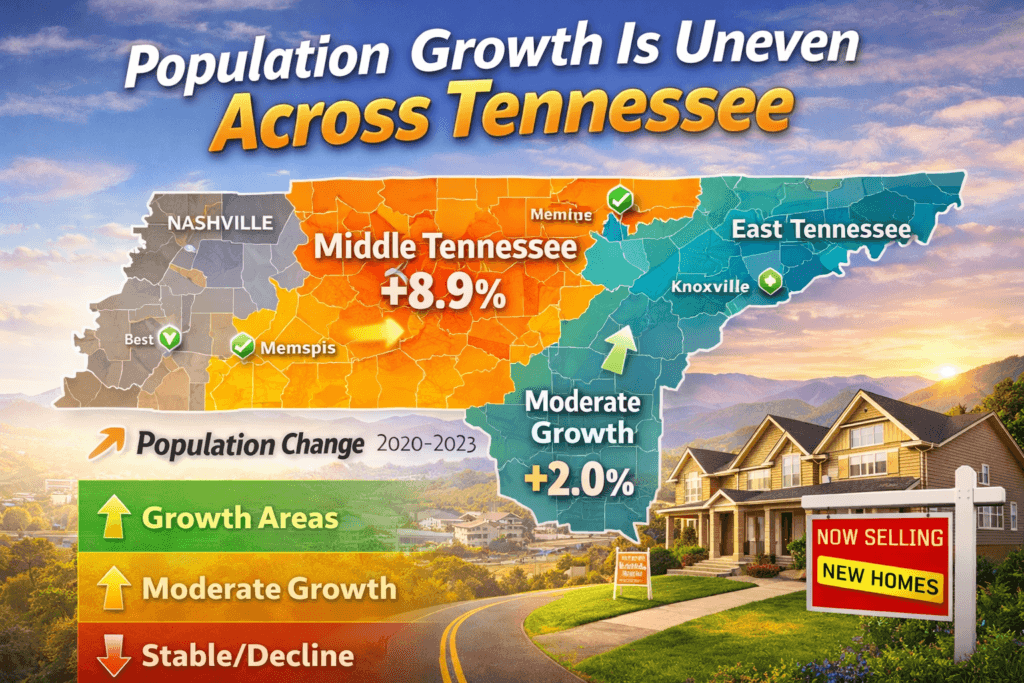
Is Tennessee really growing everywhere?
No. Population growth in Tennessee is very uneven. Most growth is concentrated in Middle Tennessee, Knoxville, and select suburbs near major job centers. Large portions of the state feel largely unchanged.
This matters because growth affects traffic, new construction, services, and daily pace of life. Instead of asking if Tennessee is growing, a better question is which part of Tennessee fits your lifestyle. For example, some buyers are drawn to Williamson County real estate for schools and amenities, while others prefer the balance of space and value found in Rutherford County homes for sale or Wilson County relocation options.
Is Tennessee still cheap to live in?
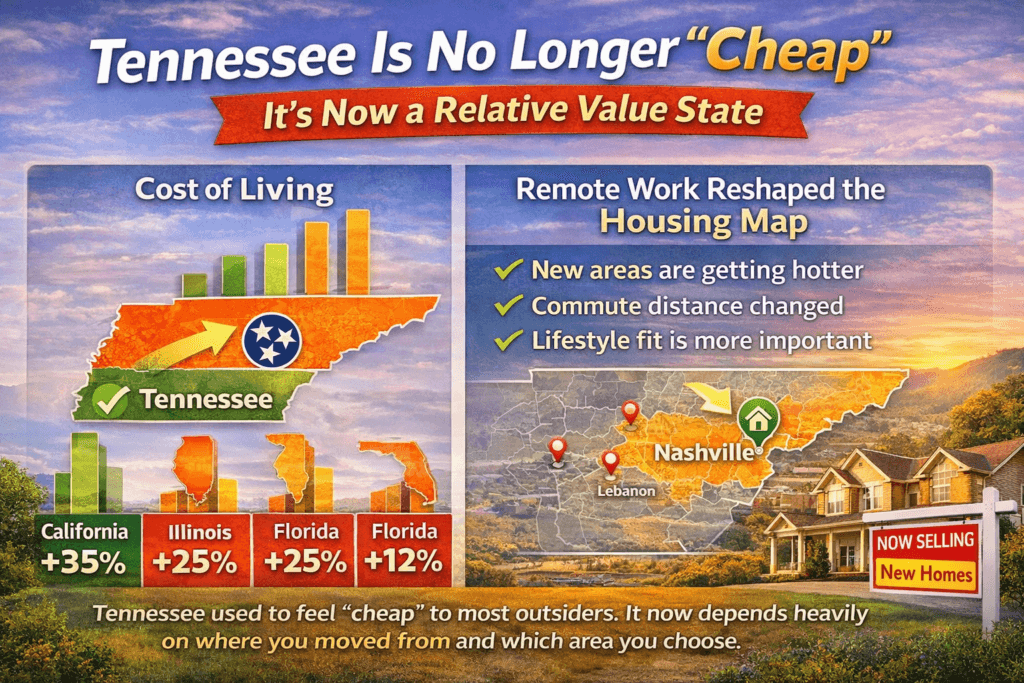
Tennessee is no longer cheap across the board. It is now comparison-based. If you are coming from California, New Jersey, or parts of Florida, Tennessee may still feel affordable. If you are coming from a smaller town or lower-cost state, it may feel expensive.
Affordability depends on where you are coming from and which city or county you choose. Housing costs in Williamson County can feel very different from Sumner County living, even though both are part of Middle Tennessee. Two families can move here at the same time and have very different financial experiences.
Why is entry-level housing so competitive in Tennessee?
Most competition is not at the top of the market. It is at the entry level. Starter homes attract first-time buyers, relocations, investors, and downsizers all at once.
These homes move fast, receive multiple offers, and leave little room for hesitation. Understanding this early helps buyers set realistic expectations and make confident decisions.
How has remote work changed where people live?
Remote work reshaped Tennessee housing. Areas that once felt too far out are now popular, including smaller towns and semi-rural communities.
However, distance alone does not determine value anymore. Reliable internet, road quality, services, and community infrastructure matter more than commute miles.
Housing Reality Most Buyers Don’t Expect
Why internet reliability matters more than ever
Internet availability is not equal across Tennessee. Urban and suburban areas usually have strong service, while rural areas can vary street by street.
Internet affects work, income, education, and long-term flexibility. Always verify service before choosing a location.
Why housing inventory feels different depending on location
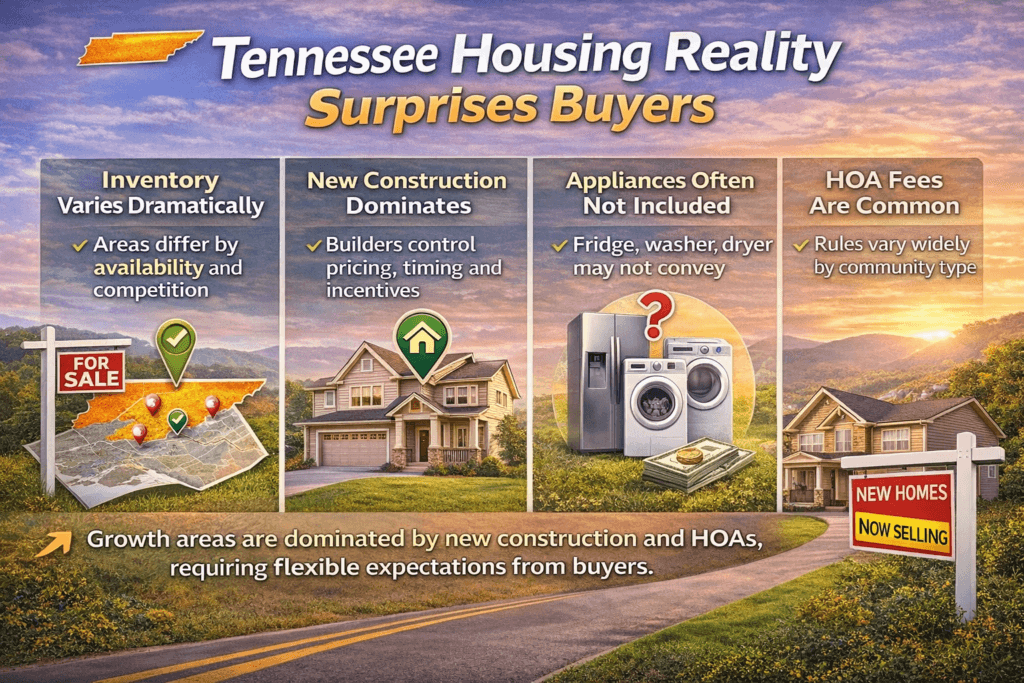
In some areas, you will see pages of listings. In others, there may be only a handful of homes available.
Fast-growing areas have steady activity. Rural or landlocked communities see fewer listings, and when homes do hit the market, they often sell quickly. Inventory shapes competition, pricing, and how flexible you need to be.
Why new construction dominates many Tennessee markets
In many high-growth areas, especially Middle Tennessee, new construction is the primary option. Buyers often end up in communities that did not exist a few years ago.
New construction offers modern layouts, energy efficiency, and warranties, but it also comes with different pricing strategies, timelines, and rules than resale homes.
How builders really control pricing and incentives
When new construction dominates, builders set the tone. The real value is often in closing cost incentives, rate programs, and upgrades, not the list price.
Buying new construction is less about negotiation and more about strategy, timing, and guidance.
Why representation matters more than you expect
In heavy new construction markets, builder sales teams represent the builder, not the buyer.
Having your own representation helps you compare communities, negotiate incentives, track construction, and avoid costly mistakes, especially if you are buying from out of state.
Are appliances included in Tennessee homes?
Often, no. Refrigerators, washers, and dryers are not always included, especially in new construction.
This varies by contract, so it must be clarified and negotiated before closing.
Are HOAs common in Tennessee?
Yes, especially in growth areas and new construction communities. HOAs range from light maintenance agreements to highly structured neighborhoods.
Understanding the rules, fees, and restrictions before committing is critical.
Are property taxes really low?
Tennessee property taxes are relatively low compared to many states, but reassessments matter.
When a home sells or a new build is completed, the assessed value often resets. Smart budgeting is based on projected assessments, not past tax bills.
Why basements are rare in Tennessee
Basements are uncommon due to limestone and rocky soil. Most homes are built on slabs or crawl spaces.
This affects storage, renovations, storm planning, and resale expectations.
How storm safety works without basements
Storm shelters and safe rooms look different here. Some homes have interior safe rooms, while others rely on community or garage-installed shelters.
Tornado preparation is taken seriously, just handled differently.
Weather, Land, and Infrastructure
Are termites really that common?
Yes. Termites are normal in Tennessee. Routine inspections, termite bonds, and prevention plans are standard and protect long-term equity.
Should you worry about radon in Tennessee?
Radon exists in pockets depending on county and soil composition. Testing is simple, and mitigation is effective.
It is a behind-the-scenes issue that should always be checked.
Is infrastructure keeping up with growth?
Not always. Some fast-growing counties are straining roads, schools, and utilities.
Understanding where an area is in its growth cycle helps set realistic expectations, especially when comparing fast-growing suburbs in Rutherford County with more established communities in Williamson County.
Why county lines matter more than you think
Road quality, snow response, drainage, and services vary widely by county.
Two towns 20 minutes apart can feel completely different in daily life.
Driving, Utilities, and Daily Living
Is Tennessee a driving state?
Yes. Outside a few urban pockets, daily life is car-dependent.
Choosing where you live means thinking seriously about drive times, not just distance. This is especially true for buyers comparing Murfreesboro in Rutherford County, Mt. Juliet in Wilson County, and Franklin or Brentwood in Williamson County.
Why some Tennessee commutes are nationally ranked
Certain corridors, including I-24, I-40, and I-65, are consistently congested.
Many residents choose housing specifically to avoid these routes.
Do EV and hybrid owners pay extra fees?
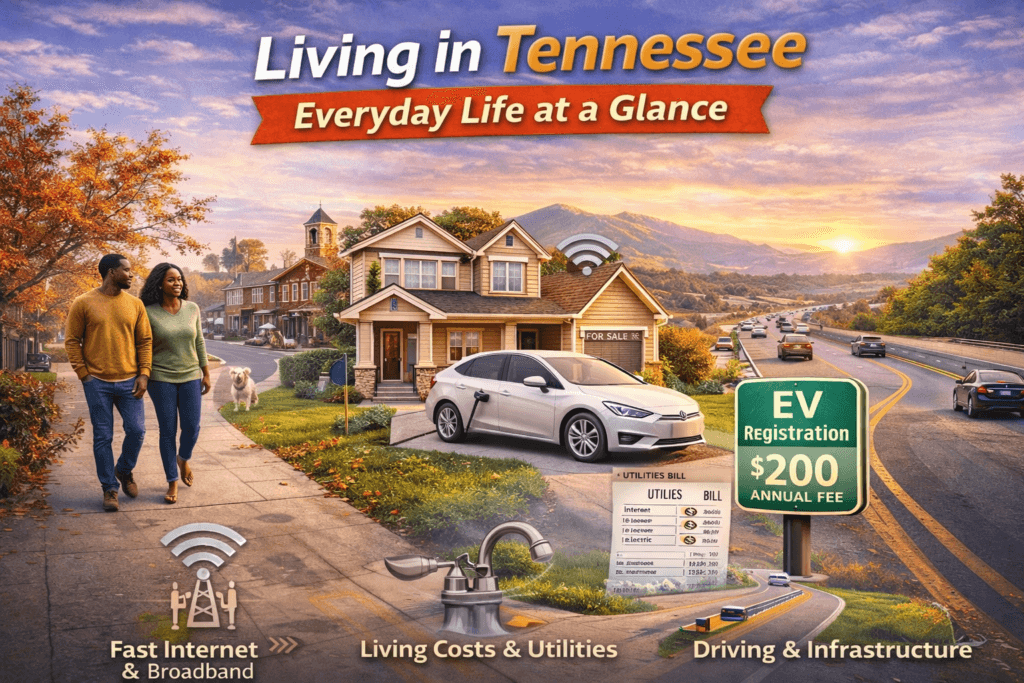
Yes. Tennessee charges additional annual registration fees for EV and hybrid vehicles to fund infrastructure.
These fees are permanent and should be factored into ownership costs.
How utilities differ across the state
Many areas are powered by the Tennessee Valley Authority, which offers relatively stable electricity pricing.
Outside city limits, septic systems are common, and housing age affects utility efficiency.
Why daily convenience varies so much
Some communities offer everything within minutes. Others require planning for groceries, medical care, and services.
Neither lifestyle is better, but they are very different.
Legal and Transaction Differences
Why buyer representation is now required before touring
Buyers must sign a representation agreement before touring homes in Tennessee.
This change surprises many out-of-state buyers and should be planned for ahead of time.
Exclusive vs non-exclusive buyer agreements
Exclusive and non-exclusive agreements are not the same. Understanding what you are signing matters for compensation, representation, and flexibility.
Bonus: Tennessee is a title state
Closings are typically handled by title companies, not attorneys, which often means faster and smoother transactions.
Bonus: Surveys are property-specific
New surveys are not always required. Whether you need one depends on the property and land use.
Frequently Asked Questions About Moving to Middle Tennessee
Is Middle Tennessee a good place to live for families?
Yes, Middle Tennessee is widely considered a strong choice for families, especially in areas like Williamson County, Wilson County, Rutherford County, and parts of Sumner County. Many families are drawn to the region for its mix of suburban communities, access to employment, relatively lower property taxes, and a wide range of housing options, particularly in family-friendly areas across Williamson County, Wilson County, and Sumner County. That said, school quality, commute times, and neighborhood feel vary significantly by county and even by city, so choosing the right area matters more than choosing the state itself.
What is the cost of living like in Middle Tennessee compared to other states?
Middle Tennessee is no longer a low-cost market, but it remains more affordable than many major metro areas on the coasts. Housing costs are typically lower than places like California, New Jersey, or the Northeast, while utilities and property taxes remain relatively manageable. However, compared to smaller towns or rural areas in other states, Middle Tennessee may feel more expensive, especially in high-demand suburbs near Nashville.
What are the pros and cons of moving to Middle Tennessee?
The biggest pros of moving to Middle Tennessee include job growth, no state income tax, a central location, and a wide variety of lifestyle options, from urban neighborhoods to rural acreage. The cons often include traffic congestion in certain corridors, fast-paced development in some suburbs, and uneven infrastructure growth. For many people, the key is balancing convenience, commute avoidance, and long-term livability rather than focusing on home price alone.
Are property taxes really low in Middle Tennessee?
Property taxes in Middle Tennessee are generally lower than the national average, but new homeowners should be cautious when budgeting. When a home sells or new construction is completed, the assessed value often resets, meaning taxes may be higher than what the previous owner paid. Planning based on estimated assessed value, not historical tax bills, helps avoid surprises after closing.
Do I need a real estate agent to buy a home in Middle Tennessee?
Yes, and in many cases it is required. Buyers in Tennessee must sign a buyer representation agreement before touring homes. Beyond the requirement, working with a local Middle Tennessee agent is especially important due to heavy new construction, builder-specific contracts, and relocation complexity. Local guidance helps buyers compare communities, understand growth patterns, and avoid costly mistakes.